Manual vs. Motorized Rigging Systems: Which Is Right for Your Stage?
The right rigging system can add a little magic to every production, allowing for elements like scenery, lighting, curtains, and audio equipment to be moved and positioned exactly where they are needed during different moments of the performance. With traditional manual and more modern motorized options both available, choosing the best rigging system for your venue will depend on a variety of factors including the size of your stage, total load capacity, budget, operational needs, and the level of precision required. Need help making a rigging decision? Thern Stage is here to help.
What Is a Stage Rigging System?
A rigging system is the infrastructure used to lift, suspend, fly, and otherwise move various stage elements and equipment above a stage. Rigging systems are invaluable for streamlining and enhancing all kinds of productions, used for highly visible parts of performances and even invisible, seamless behind-the-scenes work that keeps audiences engrossed in a production.
Manual rigging is reliant on stagehand operation and is often designed around counterweight systems to make lifting, lowering, and holding various heavy equipment and stage elements easier. On the other hand, motorized rigging uses electrically powered and precisely controlled winches and hoists to handle these tasks.
Manual Rigging Systems
Traditional doesn’t mean outdated. Manual rigging has benefited from refinement and innovation throughout many years of use across untold venues, giving a variety of system types to choose from. All of these systems require physical stagehand labor, and are often better suited for smaller venues and productions with limited flying needs.
How Manual Rigging Works
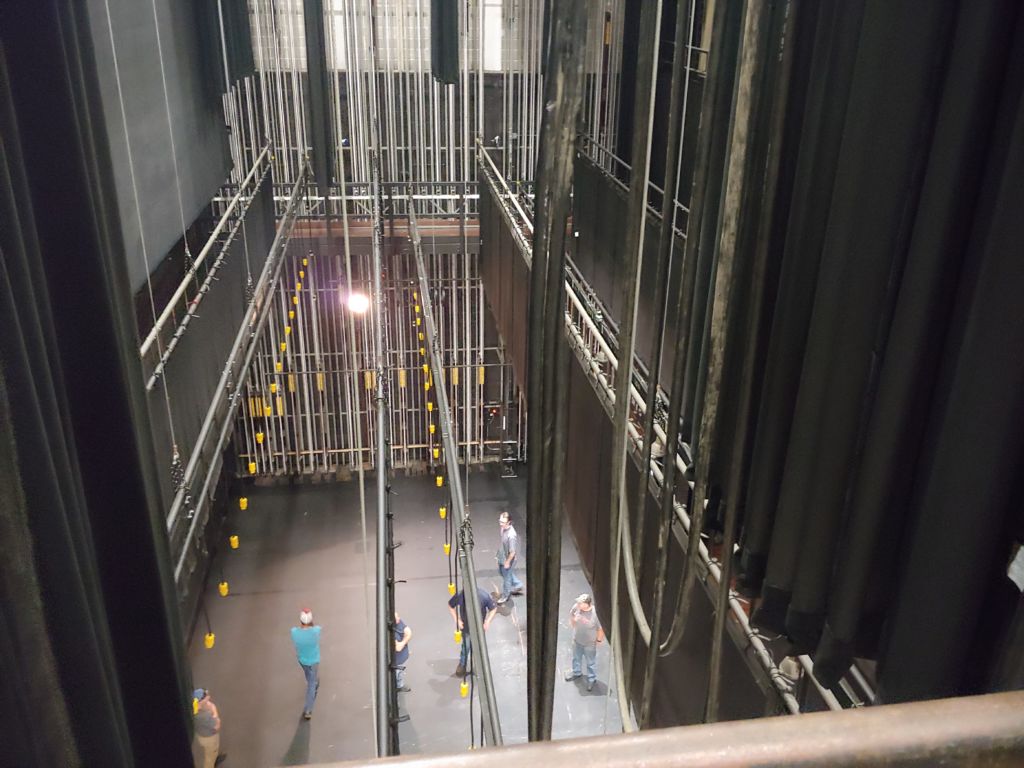
In general, manual rigging systems are operated by stagehands with ropes or hand-lines to raise and lower battens as needed. These battens are what equipment and scenery is mounted to, allowing crews to move scenery, clusters of lights, audio equipment, curtains, and other components where they need to be throughout productions. Modern manual rigging almost always features counterweight systems in either single-purchase or double-purchase arrangements, which use an arbor loaded with weights to balance the fly load. Single-purchase rigging uses a single pulley at the top and provides one-to-one positioning (a stagehand pulls two feet of rope and the load moves two feet in response), while double-purchase systems have two pulleys and require two-to-one counterbalancing to produce two-to-one results (pull two feet of rope, move the load four feet).
Recent advancements, like Thern Stage’s front-loading arbors, make manual counterweight rigging systems even easier and safer to use. Older systems, such as hemp rigging, use natural fiber ropes, sandbag weights, and pulleys to move and position loads.
Advantages of Manual Rigging
Manual rigging systems remain popular and smart choices for many venues. Some of the advantages include:
- Lower installation costs
- Simpler maintenance
- Fewer failure points
- No power requirements
Limitations of Manual Rigging
Before choosing a manual system, it’s also important to consider the potential drawbacks, such as:
- Trained stagehands are required for every cue
- Slower to operation during complex scene changes
- Physical effort requirements limit the maximum practical load
- Less precise speed and position control
These disadvantages are especially pronounced in older versions of manual rigging like hemp rigging, which require highly trained and experienced crews working in precise concert to hit every cue correctly.
Motorized Rigging Systems
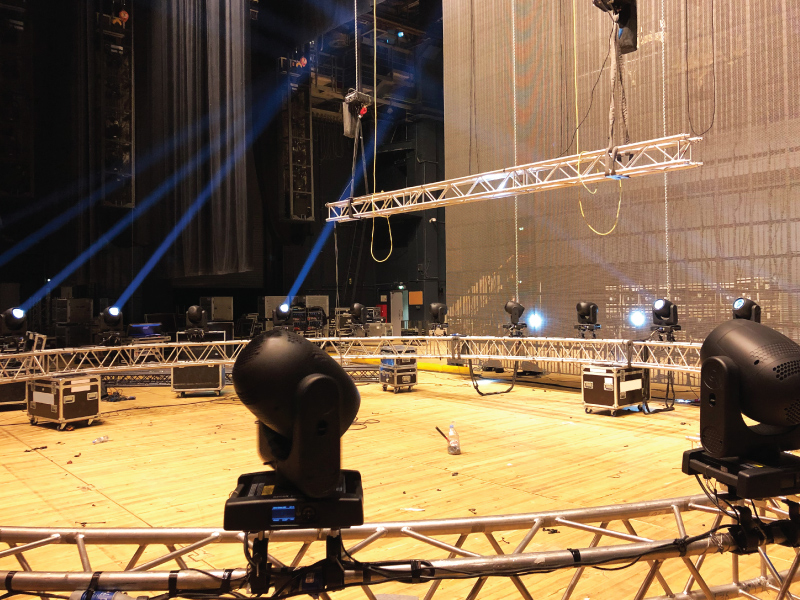
Motorized systems offer a more tech-forward approach to stage rigging, using electric chain hoists or motorized winches to raise, lower, and position various pieces of stage equipment. These systems can leverage automated controls, exceptional precision, and repeatable positioning for even the most complex productions.
How Motorized Rigging Works
Motorized rigging can be operated by a stage manager or operator that can input cues directly into a control console. Based on the controls, battens with multiple elements or individual pieces of equipment attached to motorized hoists or winches can be raised, lowered, or held to pre-programmed positions. Encoders integrated into these systems are used to track the exact position of each element within the larger control system.
Chain hoist motorized rigging is compact and versatile, often used during touring shows, productions, or similar types of temporary installations. Wire rope winches are more geared toward permanent installations, with higher load capacities and robust durability. Motorized rigging can also be used in automated systems, which are fully programmable, multi-axis rigs that are often used in large-scale productions like stadium shows or complex, high-end theatrical productions.
Advantages of Motorized Rigging
Some of the upsides of motorized rigging solutions include:
- Precise speed and position control
- Fewer stagehands required
- Move multiple line sets simultaneously
- Enable complex aerial effects and flying performers
- Programmable cues reduce human error
Limitations of Motorized Rigging
While highly effective in the right situation, motorized rigging systems aren’t the right fit for every stage. Some limitations of motorized rigging include:
- Higher initial cost for both equipment and installation
- Requires trained automation operators
- More regular maintenance needs than manual systems
- Dependent on electrical power and software functionality
- More complex troubleshooting when failures occur
| Factor | Manual Rigging | Motorized Rigging |
| Up-front Cost | Lower | Higher |
| Operating Labor | More stagehands required | Fewer operators needed |
| Speed of Operation | Slower | Faster, programmable |
| Position Precision | Moderate | High (encoder-tracked) |
| Load Capacity | Limited by counterweight | Higher, but motor-dependent |
| Maintenance Complexity | Low | Moderate to high |
| Best For | Smaller venues, limited budgets | Large venues, complex shows |
| Power Dependency | No | Yes |
How to Choose the Right Rigging System for Your Stage
The right rigging for your venue depends on four main factors: venue size, production complexity, budget, and available staff. For instance, if the venue seats fewer than 500 people, the budget is somewhat limited, and you generally put on straightforward productions, a manual rigging system is likely the best choice. But motorized rigging is probably the smart choice for larger venues, productions that require scene automation, simultaneous line set movement, or flying performers, and operations with limited stage hands but capable technical operators.
There is no requirement that your rigging system be entirely manual or motorized. Many venues benefit greatly from hybrid systems that combine the simplicity, reliability, and affordability of manual rigging for straightforward jobs, while using motorized rigging for specialty effects or elements that require automation or extreme precision.
Safety Considerations for Stage Rigging
No matter the type of rigging system, stage rigging safety is a must for every venue and production. The safety of performers, audience members, and stagehands depends on regular rigging system inspections, load calculations, and operator certification. Some best safety practices to keep in mind are:
- Inspect all rigging hardware before each production
- Always operate within working load limits
- Maintain a log for every inspection and repair
- Ensure there are redundant safety cables for all flown objects.
It’s also important to ensure your rigging equipment and staff are up to the required level. Only use equipment that meets standards like UL, ESTA, and ANSI E1.6-1, while ensuring everyone operating the rigging is certified by the Entertainment Technician Certification Program (ETCP).
FAQ: Manual vs. Motorized Stage Rigging
Is motorized rigging safer than manual rigging?
There is no guarantee one type of rigging system is safer than the other. Both motorized and manual systems are safe when properly installed, inspected, and operated by certified technicians. Motorized systems have encoder-based position monitoring and load sensing, which can reduce certain human errors. However, motorized rigging can have electrical failure points that can cause dangerous situations. Conversely, manual systems have fewer failure points, but rely entirely on human operator skill and attention.
Can a stage have both manual and motorized rigging?
Yes. Hybrid rigging systems are common in both mid-size and large venues. Counterweight rigging is often used for standard line sets, while motorized hoists are reserved for flying performers, large set pieces, or effects that require extremely precise positioning or automation.
Need Help Finding What You’re Looking For?
Thern Stage Equipment carries a wide range of high-quality rigging solutions, including counterweight rigging, hoists, blocks, and controls. Our team of expert engineers is adept at creating unique, custom solutions for all types of venues. Whether you’re searching for manual, motorized, or hybrid rigging systems for your stage, we can help you find the ideal solution. Reach out to us for more details or to get started on your rigging project!